
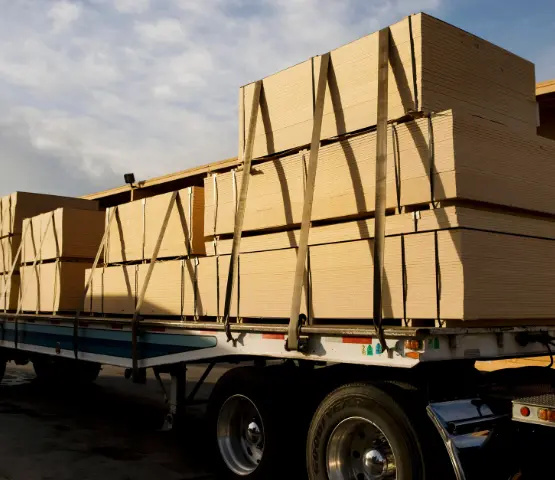
Flatbed Transportation
Flatbed transportation for open-deck freight
Open-deck capacity for freight that loads from the side or top — building materials, steel, lumber, and machinery within legal dimensions.
What flatbed transportation is
Flatbed trailers carry freight that can't be loaded through the doors of an enclosed trailer, or that is loaded by crane or forklift from the side. When the freight stays within legal height and weight, a flatbed is usually the most straightforward open-deck option.
The Freight Dynamics brokers flatbed loads with authorized carriers and coordinates securement requirements — straps, chains, edge protection, or tarps — with the shipper and carrier before pickup.
Freight that typically needs it
- Structural steel, pipe, and rebar
- Lumber, panels, and building materials
- Machinery and equipment within legal height
- Palletized materials that load from the side
- Construction and job-site materials
Typical equipment
- 48 ft and 53 ft flatbeds
- Deck height is typically around 5 ft, which leaves roughly 8 ft 6 in of legal freight height in most states.
- Securement and tarps
- Chains, straps, edge protection, and tarps as the commodity requires.
Trailer specifications vary by carrier and state; we confirm the configuration for your load.
Planning
What shapes the plan
Height is the main limit
Because the deck sits higher than on drop-deck trailers, tall freight may need a step deck, RGN, or lowboy instead. We check this against your dimensions.
Securement and protection
Commodity type determines chains versus straps, edge protection, and whether tarps are needed. Tell us early if freight must stay dry.
Loading method
Confirm whether the site loads by forklift or crane and from which side, so the right carrier and trailer are dispatched.
Industries and use cases
- Construction & Infrastructure — Heavy equipment, structural materials, and oversize components moved on job-site schedules.
- Energy & Renewables — Electrical equipment, structural components, and project materials for generation and grid work.
- Oil & Gas — Pipe, tanks, production equipment, and heavy machinery moved to field and facility locations.
- Mining & Industrial Equipment — Heavy machinery and production equipment that need specialized trailers and careful planning.
- Agriculture & Heavy Machinery — Combines, tractors, and implements moved between dealers, farms, and auctions.
Related services
What we need to quote it
- Origin and destination
- Commodity description and piece count
- Dimensions and total weight
- Tarping or special securement needs
- Pickup date window and delivery requirements
Flatbed FAQs
What is the difference between a flatbed and a step deck?
A flatbed has a single deck, typically about 5 ft off the ground. A step deck (drop deck) has an upper deck over the tractor and a lower main deck, so it carries taller freight — typically up to around 10 ft — without exceeding legal height.
Do you handle tarped loads?
Yes, tarping can be specified when you request a quote. Tell us the commodity and whether it must stay dry, so the carrier brings the right tarps.
How much can a flatbed carry?
It depends on the tractor and trailer, but legal payload on a standard flatbed is commonly in the range of 45,000–48,000 lb within an 80,000 lb gross vehicle weight. Heavier loads move to heavy haul equipment.
Request a flatbed quote
Let's Move Your Next Shipment.
Share the load details and our team will work out the right equipment, route, and plan.